




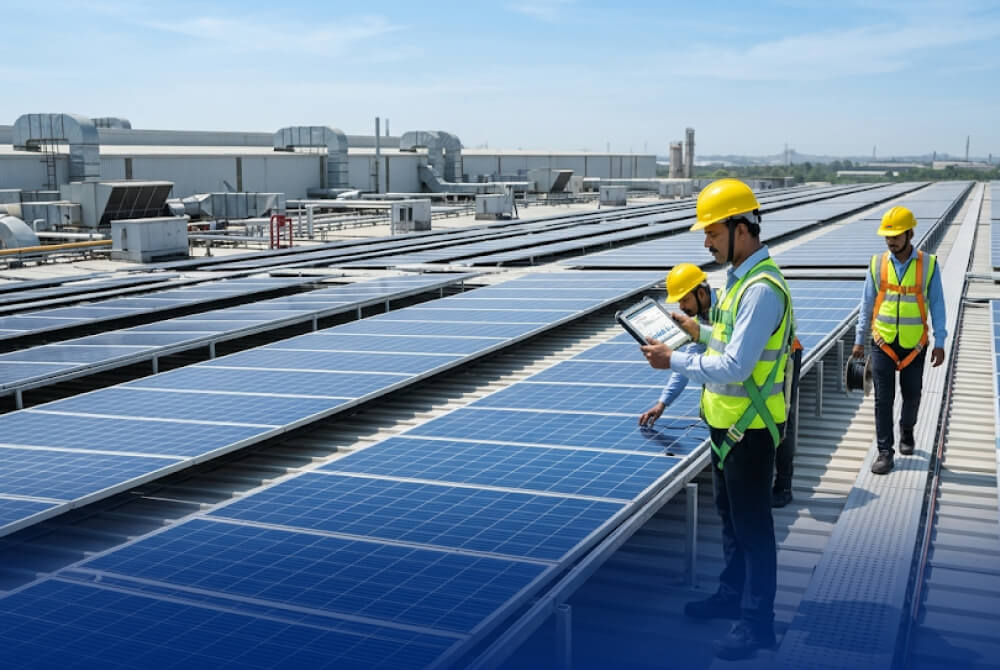
Industrial rooftops offer significant potential for solar energy generation. However, planning a successful system involves more than selecting solar panels and installing them on a roof. Businesses need to consider roof conditions, electricity consumption, equipment compatibility, safety and long-term maintenance before starting a Solar rooftop installation.
For industrial facilities, the right system design can help make better use of available roof space and support long-term energy requirements. Here are eight important factors to consider when planning an industrial rooftop solar system.
1. Assess the Roof’s Structural Strength
Before starting a rooftop solar installation, the roof must be checked to confirm whether it can support the additional weight of solar modules, mounting structures, cables and other equipment.
Industrial buildings may have metal sheet roofs, concrete roofs or other structures. Each roof type has different load-bearing requirements. A structural assessment helps identify whether reinforcement or additional support is needed before installation.
Roof condition should also be checked for corrosion, leakage, damaged sheets and other maintenance issues.
2. Understand Electricity Consumption
Electricity consumption is one of the most important factors when planning an industrial solar system.
Businesses should review their electricity bills and load profiles to understand:
- Daily and monthly electricity consumption
- Peak demand periods
- Daytime energy usage
- Seasonal variations in power requirements
- Available rooftop area
Understanding these details helps determine an appropriate system capacity. A system designed around actual consumption patterns can support better energy utilisation.
3. Evaluate Roof Orientation, Shading and Available Space
The amount of electricity generated by a rooftop solar system depends partly on the available installation area and sunlight exposure.
Nearby buildings, trees, chimneys, ventilation equipment and other rooftop structures can create shadows. Even partial shading can affect the output of certain solar panel configurations.
During system planning, the roof should be assessed for:
- Available installation space
- Roof orientation and tilt
- Shading throughout the day
- Distance between panel rows
- Access pathways for maintenance
Careful layout planning helps make effective use of the available roof area.
4. Select Solar Modules Based on Quality and Requirements
Solar modules are a major component of any industrial rooftop solar system. Their selection should be based on technical specifications, product quality, reliability and application requirements.
Important factors include module efficiency, power output, temperature coefficient, mechanical load ratings and applicable certifications.
Manufacturing consistency also matters. Proper cell interconnection, lamination and quality-control processes contribute to module reliability.
Businesses evaluating Commercial solar solutions should consider modules that suit the facility’s operating conditions rather than selecting products based only on their rated wattage.
5. Choose the Right Solar Inverter
A solar inverter converts the DC electricity generated by solar modules into AC electricity that can be used by industrial equipment or supplied to the electrical grid.
The inverter should be selected according to system capacity, module configuration, operating voltage and application requirements.
Important considerations include:
- Inverter capacity and efficiency
- MPPT configuration
- DC and AC voltage compatibility
- Protection and safety features
- Monitoring and communication options
- Grid compatibility
Choosing suitable Solar inverter solutions helps ensure that the modules and inverter operate together as a properly matched system.
6. Consider Mounting Structures and Waterproofing
Mounting structures hold solar modules in position and help maintain the required tilt and orientation.
The structure should be suitable for the roof type and local environmental conditions. Wind loads, corrosion resistance, material quality and structural stability should all be considered.
For industrial metal roofs, particular attention should be given to mounting points and waterproofing. Incorrect installation can increase the risk of water leakage and roof damage.
Suitable mounting arrangements also need to allow access for cleaning and maintenance.
7. Follow Electrical Safety and Regulatory Requirements
Industrial rooftop solar installations involve electrical equipment, high-voltage connections and grid integration. Therefore, safety and regulatory compliance must be considered during every stage of installation.
Key areas include:
- Proper earthing and lightning protection
- Suitable AC and DC protection devices
- Correct cable sizing and routing
- Safe inverter placement
- Emergency isolation arrangements
- Compliance with applicable electrical and grid regulations
Installation teams should follow relevant Central Electricity Authority safety requirements and applicable state electricity distribution company procedures.
8. Plan for Monitoring and Long-Term Maintenance
After installation, regular monitoring helps businesses understand system performance and identify potential issues.
Monitoring systems can provide information about energy generation, inverter operation and system alerts. This information can help identify problems such as unexpected drops in output or equipment faults.
Routine maintenance may include:
- Cleaning solar modules when required
- Checking electrical connections
- Inspecting mounting structures
- Reviewing inverter performance
- Checking cables and protection equipment
Businesses should also consider whether the system can accommodate future expansion if electricity requirements increase.
Conclusion
Industrial rooftop solar installations require careful planning across several technical and operational areas. Roof strength, energy consumption, module quality, inverter compatibility, mounting structures, electrical safety and maintenance all influence the overall system design.
By evaluating these factors before installation, businesses can make more informed decisions about their solar investments. Australian Premium Solar (APS) supports the solar industry with solar product solutions designed for different application requirements, including residential, commercial and industrial installations.