





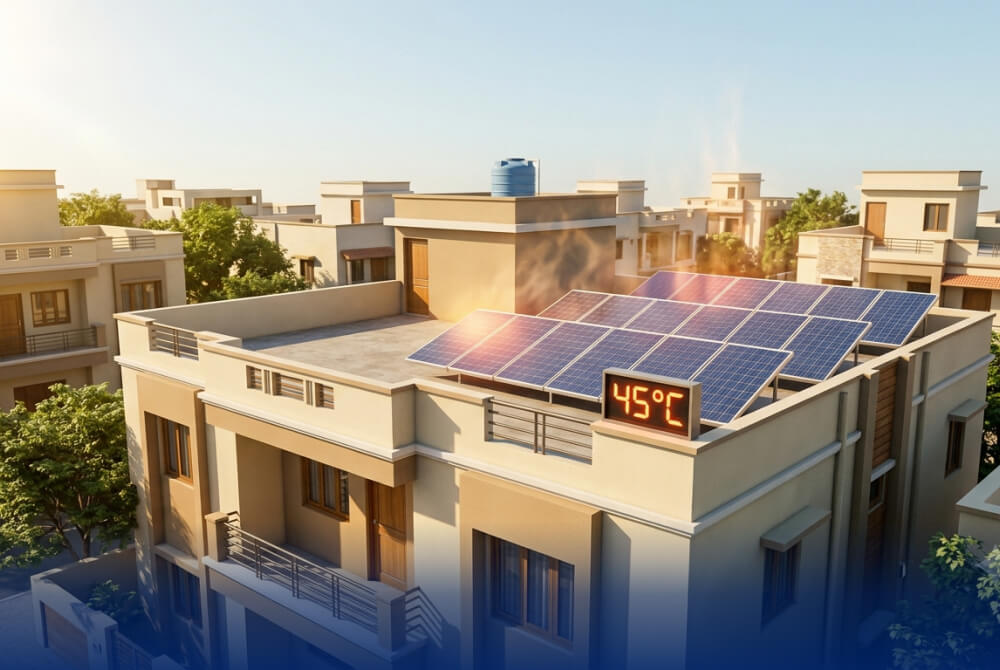
Solar panels are designed to generate electricity from sunlight, but their power output can change as operating temperatures increase. During summer, solar panels receive strong sunlight and can produce substantial amounts of electricity. However, excessive heat can reduce their electrical output, even when sunlight is plentiful.
Understanding the solar panel temperature coefficient helps homeowners and businesses evaluate solar panel performance in summer. This specification indicates how a panel’s power output changes as its cell temperature rises above the standard reference temperature.
By understanding temperature coefficients, comparing solar panels and planning installations carefully, property owners can make more informed decisions about their solar energy systems and expected summer performance.
What Is a Solar Panel Temperature Coefficient?
A solar panel temperature coefficient describes how the electrical performance of a solar panel changes when its temperature varies. Manufacturers generally provide a power temperature coefficient in the panel’s technical datasheet.
The power temperature coefficient is usually expressed as a percentage per degree Celsius (%/°C). For example, a coefficient of -0.35%/°C indicates that the panel’s maximum power output decreases by approximately 0.35% for every 1°C increase in cell temperature above the reference temperature, under the stated test conditions.
A negative temperature coefficient means that the panel’s power output tends to decrease as its cell temperature increases. Panels with a less negative power temperature coefficient generally retain more of their rated power under comparable high-temperature conditions.
When comparing solar panels, it is important to consider this specification alongside rated power, efficiency, product quality and warranty coverage.
How Solar Panel Power Output Changes During Summer
Solar panel performance in summer depends on several factors, including sunlight intensity, cell temperature, shading, installation conditions and the panel’s electrical characteristics.
Although strong sunlight can increase electricity generation, high cell temperatures can reduce the voltage produced by solar cells. This voltage reduction can lower the panel’s maximum power output.
It is also important to understand that solar panel temperature is different from outdoor air temperature. Under direct sunlight, solar cells can become considerably hotter than the surrounding air. The actual operating temperature depends on factors such as solar irradiance, wind speed, mounting arrangements and ventilation.
For this reason, solar panels may experience temperature-related power losses during hot weather, even when the sky is clear and sunlight is abundant.
However, a reduction in instantaneous power output does not necessarily mean that total daily energy production will be lower than in cooler weather. Longer daylight hours and strong sunlight may help maintain substantial daily solar energy generation.
How to Compare Solar PV Panels for Hot Conditions
When selecting solar PV panels for regions with hot summers, temperature performance should be one of the factors considered during the evaluation process.
1. Check the Power Temperature Coefficient
Review the manufacturer’s datasheet to identify the power temperature coefficient. A less negative value generally indicates that the panel experiences a smaller percentage reduction in maximum power output as its cell temperature rises.
Compare this specification across panels using consistent test conditions and reliable manufacturer information.
2. Consider Rated Power and Efficiency
Rated power indicates the panel’s nominal power output under standard test conditions, while efficiency describes how effectively the panel converts sunlight into electricity over its surface area.
Both specifications are important when evaluating solar panels. However, a higher rated power or efficiency does not automatically mean a panel will perform better at elevated temperatures. The temperature coefficient should also be considered.
3. Evaluate Product Quality and Warranty Coverage
Solar panel quality can influence long-term reliability and performance. Look for products supported by clear technical documentation, appropriate product warranties and performance warranties.
It is also useful to review the manufacturer’s information about the panel’s intended operating conditions, durability and expected performance over time.
4. Assess Suitability for Local Conditions
Solar panels should be selected according to the property’s climate, available roof space, shading conditions and energy requirements.
In hot regions, comparing temperature coefficients alongside other technical specifications can help identify panels suited to the expected operating environment.
How Solar Panel Installation Can Influence Operating Temperature
Proper solar panel installation can influence how effectively heat escapes from the modules. Even a panel with a favourable temperature coefficient may experience elevated operating temperatures if the installation restricts airflow.
Several installation considerations can help manage heat:
- Ventilation: Appropriate airflow behind rooftop solar panels can help dissipate heat and reduce excessive temperature build-up.
- Mounting arrangement: The mounting structure should provide suitable clearance and follow the manufacturer’s installation requirements.
- Roof conditions: Roof material, roof temperature and the available space beneath the panels can influence their operating environment.
- Orientation and tilt: Panel orientation and tilt affect sunlight exposure and overall energy generation. The best arrangement depends on the location, roof design and installation objectives.
- Professional installation: A qualified installer can assess roof conditions, ventilation, shading and system design to support reliable solar performance.
These considerations should be evaluated during system planning. Installation requirements vary by panel model and mounting system, so the manufacturer’s instructions and applicable electrical and building standards should always be followed.
Do Solar Panels Still Generate Electricity Efficiently in Summer?
Yes, solar panels can continue generating substantial amounts of electricity during summer. However, their instantaneous power output may decrease when cell temperatures rise above the reference temperature used for their rated specifications.
The overall performance of a solar energy system depends on more than temperature alone. Sunlight availability, cloud cover, shading, panel orientation, inverter operation and system design all contribute to the amount of electricity generated.
This is why solar panel performance should be assessed over time rather than judged only by the hottest part of the day. A well-designed solar PV system can deliver valuable electricity throughout summer, even when high operating temperatures cause some reduction in power output.
Choosing panels with suitable temperature characteristics and ensuring proper installation can help support reliable performance under local climate conditions.
How to Monitor Solar Energy Systems During Summer
Monitoring solar energy systems can help property owners understand how their systems perform during periods of high temperature.
Many modern inverters and monitoring platforms provide information about electricity generation, system operation and historical performance. Reviewing this information can help identify unexpected changes in output.
When evaluating summer performance, consider the following:
- Daily energy generation: Review total electricity production over several days or weeks instead of relying on a single reading.
- Weather conditions: Consider changes in sunlight, cloud cover and temperature when comparing generation.
- Shading and cleanliness: Check whether new obstructions, dust or accumulated debris may be affecting sunlight exposure.
- System alerts: Pay attention to inverter warnings or monitoring alerts that may indicate an operational issue.
- Professional inspection: If generation remains unexpectedly low after accounting for weather and shading, arrange an assessment by a qualified solar technician.
Monitoring helps distinguish normal temperature-related changes from potential system faults. Any inspection or maintenance should follow appropriate safety procedures.
Conclusion
The solar panel temperature coefficient is an important specification for understanding how solar panel power output changes during summer. Because solar cells can become significantly hotter than the surrounding air, high operating temperatures may reduce their maximum power output.
When comparing solar PV panels, consider the power temperature coefficient alongside rated power, efficiency, product quality and warranty coverage. Proper installation, adequate ventilation and regular performance monitoring can also help support reliable solar energy production.
Looking for solar panels designed to perform in hot weather? Explore APS solar module solutions and discover options for your solar energy requirements.