





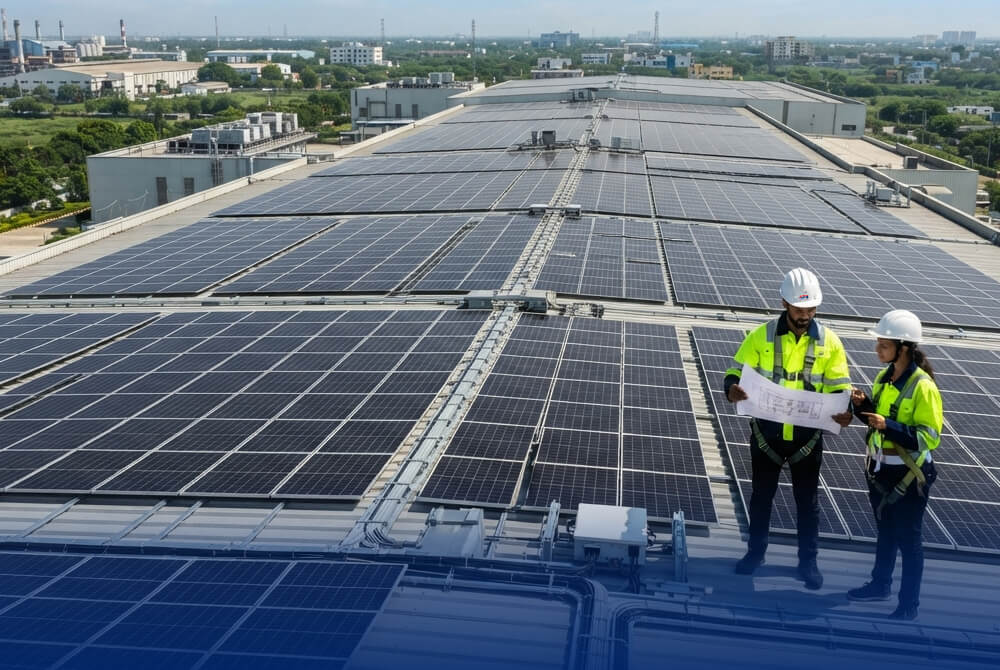
Solar energy is becoming an important consideration for businesses managing electricity consumption across large commercial properties. Offices, warehouses, manufacturing facilities and other large buildings often have different energy requirements, making project planning an important part of adopting solar power.
A successful commercial solar installation begins with understanding the property’s electricity demand, available rooftop area and existing electrical infrastructure. Evaluating these factors before installation helps businesses identify suitable equipment and develop a solar system that aligns with their operational requirements.
1. Understand the Building’s Electricity Requirements
Before selecting solar equipment, businesses should review how much electricity their facilities consume. Large buildings may operate machinery, lighting, air-conditioning systems, computers and other electrical equipment throughout the day.
Reviewing electricity bills and consumption records can help identify:
- Average monthly electricity consumption
- Peak demand during business hours
- Electricity requirements of major equipment
- Seasonal variations in power usage
- Expected changes in future electricity demand
This information provides a foundation for determining the appropriate solar system capacity. It also helps businesses understand how much of their electricity demand could be supported by solar generation.
2. Evaluate Rooftop Space and Site Conditions
Available roof space is an important factor when planning commercial rooftop solar systems. Although large buildings may have extensive rooftops, certain sections might not be suitable for panel placement.
A site assessment should examine roof dimensions, orientation, slope and shading conditions. Other elements, including skylights, ventilation equipment, water tanks and maintenance walkways, should also be considered when preparing the layout.
These factors help determine how solar panels can be arranged across the available area. A practical layout should make effective use of the roof while maintaining appropriate access for inspections and maintenance.
3. Examine Roof Strength and Structural Suitability
The structural condition of a building should be evaluated before installing solar equipment. Solar modules, mounting structures and associated components add additional weight to the rooftop.
The assessment should consider the existing roof material, supporting framework, load-bearing capacity and general condition. Buildings with ageing roofs or signs of deterioration may require further inspection before installation.
A qualified structural professional can assess whether the proposed installation is suitable for the building. This step helps identify potential structural requirements before the project moves forward.
4. Choose Appropriate Solar Panels and Inverters
Selecting compatible equipment is an important part of solar panel installation planning. The choice of solar modules and inverters should reflect the project’s capacity, available space and expected operating conditions.
Businesses can evaluate solar equipment by considering:
- Solar panel wattage and conversion efficiency
- Module dimensions and available roof area
- Product specifications and warranty conditions
- Inverter capacity and compatibility
- Temperature and environmental conditions
- Equipment monitoring and maintenance requirements
APS provides solar pv modules and grid-tied inverters for different solar applications. Reviewing the available product specifications can help businesses understand which equipment options may be appropriate for their project.
5. Determine the Appropriate System Capacity
The proposed solar capacity should be based on the building’s electricity consumption and the amount of space available for installation. A system that is too large or too small may not align with the property’s actual energy requirements.
During system design, project planners should consider daytime electricity consumption, estimated solar generation, future demand and grid connection limitations.
For larger facilities, a detailed feasibility assessment can help establish a suitable system configuration. Businesses should also evaluate whether battery storage is relevant to their energy requirements and operational plans.
APS’s Commercial Solar Solutions provide further information about solar applications for commercial and industrial properties.
6. Review Electrical Infrastructure and Grid Connection
Large solar projects must work with the building’s existing electrical infrastructure. Before installation, the electrical distribution system should be reviewed to understand its compatibility with the proposed solar equipment.
Important areas to evaluate include:
- Existing electrical panels and switchboards
- Transformer and distribution capacity
- Inverter placement and configuration
- Electrical protection and isolation equipment
- Grid connection and metering requirements
The project should also account for applicable electrical standards, utility requirements and approval procedures. Qualified electrical professionals can identify any infrastructure upgrades that may be necessary before commissioning.
7. Organise Installation and Site Coordination
A large commercial project involves coordinating equipment, installation teams, building management and site access. Planning these activities in advance can help organise the work while reducing unnecessary disruption to normal business operations.
The installation schedule should consider equipment delivery, rooftop access, workplace safety procedures and the availability of suitable working areas.
Businesses should establish clear communication between their facility managers and the installation team. This is particularly important for warehouses and manufacturing facilities where daily operations may need to continue during the installation period.
8. Include Monitoring and Maintenance in the Project Plan
Monitoring and maintenance should be considered from the beginning of a solar project rather than after installation. Regular inspections and performance monitoring help businesses understand how their systems are operating over time.
Planning should cover:
- Solar panel cleaning and visual inspections
- Inverter condition and performance checks
- Electrical connection inspections
- Monitoring of solar generation
- Preventive and corrective maintenance
Businesses can explore APS’s Solar Operations and Maintenance Services to understand the importance of ongoing system monitoring and maintenance.
Future expansion should also be considered where a building may require additional energy capacity. Available roof space, electrical infrastructure and equipment compatibility will influence whether the system can be expanded later.
Conclusion
Planning solar installations for large-scale buildings involves several interconnected considerations, from electricity consumption and rooftop suitability to equipment selection, electrical infrastructure and ongoing maintenance. Evaluating these requirements before installation helps businesses make informed decisions about system design and project execution.
Australian Premium Solar (APS) offers solar modules, inverters and commercial solar solutions for different applications. Businesses can explore the available solutions and assess their project requirements before selecting a suitable solar installation approach.