





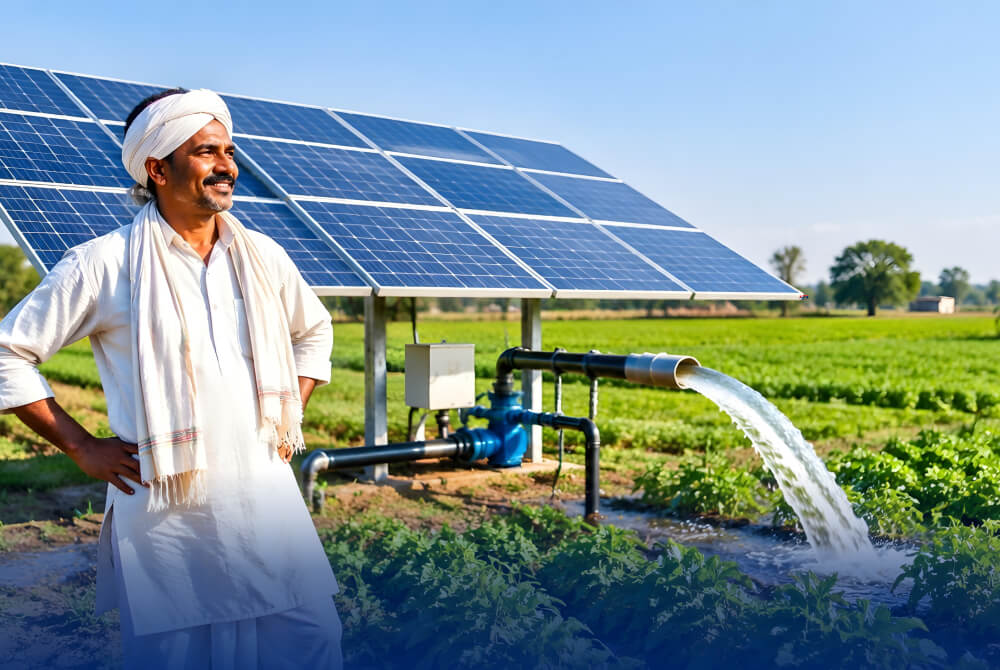
Agricultural water management requires reliable pumping systems that can support irrigation schedules and changing water requirements. Solar-powered pumping systems provide an alternative way to operate agricultural pumps using electricity generated from solar photovoltaic (PV) panels. Within these systems, solar pump inverters play an important role in power conversion, motor operation and system control.
By integrating suitable inverter technology with solar panels and water pumps, agricultural installations can utilise available solar energy for different irrigation and water distribution requirements.
Power Conversion and Solar Energy Management
Solar pump inverters manage the electrical energy generated by PV panels and supply suitable power to the connected pump motor. Depending on the motor configuration, the inverter converts DC electricity into AC electricity for pump operation.
Many systems incorporate Maximum Power Point Tracking (MPPT) technology to help utilise available solar power under changing sunlight conditions. This supports the operation of solar pumping systems during varying solar generation periods.
Understanding solar pump technology is important when evaluating how solar energy can be integrated into agricultural pumping applications. You can also explore solar water pump technology for modern farming needs for further information.
Motor Control and Pumping Efficiency
Motor control is an important function of modern solar pumping systems. Depending on the inverter design, variable-frequency control can regulate motor speed according to available power and operating requirements.
Features such as soft start and electrical protection can also support controlled pump operation. A solar pump controller, where included as part of the system design, may provide additional operating and protection functions.
These functions help manage the electrical and operational requirements of agricultural pumping installations.
Supporting Agricultural Irrigation Requirements
Agricultural water requirements vary according to crop type, soil conditions, irrigation methods and seasonal requirements. Solar pump inverters can support pumping arrangements designed for different agricultural applications.
Their integration with drip irrigation, sprinkler systems and water distribution infrastructure allows farmers to plan pumping operations according to their irrigation needs.
Water storage tanks and reservoirs can also be incorporated into solar pumping arrangements. Water can be pumped during suitable sunlight hours and stored for distribution when required, depending on the farm’s infrastructure.
This approach can form part of a planned agricultural water management strategy by connecting solar-powered pumping with irrigation schedules and available water storage.
Key Considerations for Solar Pump Inverter Selection
Selecting a suitable solar water pump inverter requires consideration of the complete pumping system rather than inverter capacity alone.
Important factors include:
- Motor Compatibility: Matching inverter voltage, current and power ratings with the connected pump motor.
- MPPT Functionality: Considering the inverter’s ability to manage available solar power.
- Protection Features: Reviewing protection against electrical faults and abnormal operating conditions.
- Pumping Requirements: Evaluating water source depth, required discharge and total pumping head.
- Environmental Conditions: Considering temperature, dust, moisture and installation requirements.
- Monitoring Options: Checking available monitoring and system management features.
These factors help determine an appropriate configuration for different agricultural water management applications.
APS Solar Pump Solutions for Agricultural Applications
Australian Premium Solar (APS) offers solar water pumping solutions for agricultural applications, including systems designed for borewells and open wells.
Its solar pump range includes product configurations featuring MPPT technology, soft-start functionality and protective features. Monitoring capabilities are also available on supported models, depending on the system configuration.
With different pumping requirements across agricultural installations, selecting suitable equipment involves evaluating water source conditions, motor specifications and irrigation needs. Explore APS agricultural solar water pumps to learn more about available solutions.
Conclusion
Solar pump inverters connect solar energy generation with agricultural water pumping requirements through power conversion, motor control and system management. Their integration with suitable pumps, irrigation infrastructure and water storage facilities can support planned agricultural water distribution.
Understanding inverter specifications and overall system requirements helps agricultural operators evaluate suitable solar pumping configurations for their applications.