





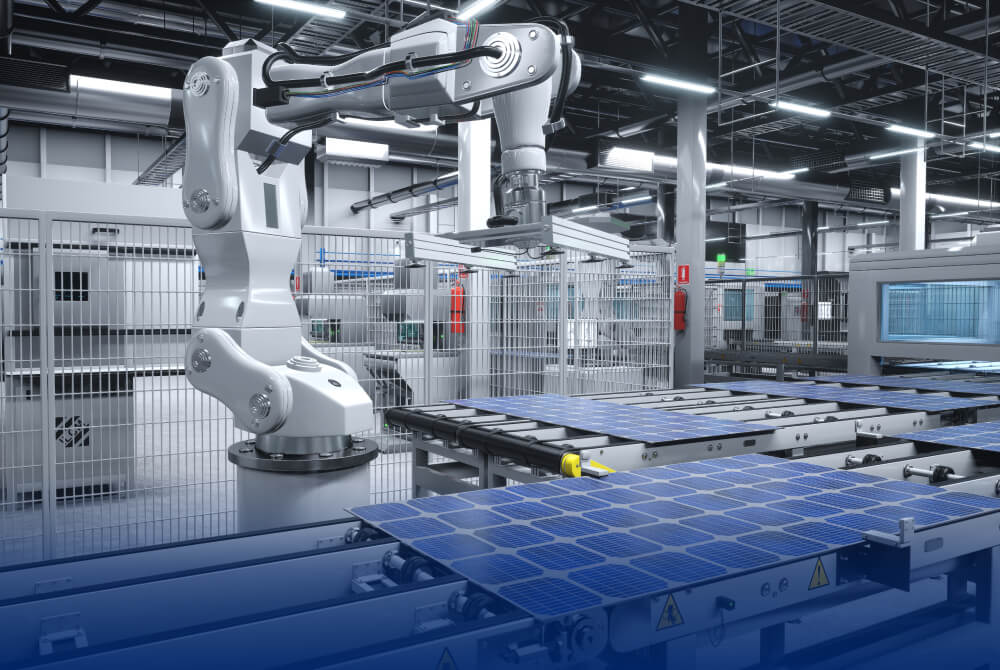
India’s solar sector has expanded rapidly, making solar power an increasingly important part of the country’s energy landscape. As solar installations continue to grow, the ability to manufacture solar modules and components within India is becoming equally important.
Solar manufacturing in India is not only about producing solar panels locally. It is also about building a stronger domestic supply chain, developing manufacturing capabilities, creating employment and reducing dependence on imported components.
India’s progress is already visible. According to the Ministry of New and Renewable Energy (MNRE), India’s cumulative installed solar capacity reached 168.04 GW as of 31 August 2026.
At the same time, domestic manufacturing capacity has expanded significantly. MNRE reported that indigenous solar module manufacturing capacity under the Approved List of Models and Manufacturers (ALMM) reached around 144 GW per year, with around 81 GW added during calendar year 2025.
So, why does domestic solar PV manufacturing matter for India’s energy future?
What Is Solar Manufacturing in India?
Solar manufacturing covers the processes involved in producing the components required for photovoltaic (PV) systems.
Depending on how integrated the manufacturing process is, this can include:
- Solar cells
- Solar modules
- Wafers
- Ingots
- Glass
- Encapsulants
- Frames
- Junction boxes
- Other module components
Solar panel production involves multiple stages, from processing photovoltaic materials and manufacturing cells to assembling cells into finished modules.
Building capabilities across more of these stages can help India develop a stronger domestic solar manufacturing ecosystem.
1. Reducing Dependence on Imports
One of the key reasons for strengthening domestic manufacturing is to reduce dependence on imported solar components.
Solar projects are long-term infrastructure investments. A greater domestic manufacturing base can give India’s solar industry a larger local supply of essential equipment and components.
MNRE’s Production Linked Incentive (PLI) programme for high-efficiency solar PV modules specifically aims to build manufacturing capacity in India and reduce import dependence in renewable energy.
A stronger domestic supply chain can also provide greater resilience when international markets experience disruptions or changes in supply.
2. Building a Stronger Solar Supply Chain
Solar panels do not consist of a single manufactured component.
The broader PV supply chain includes several stages, from raw materials and wafers to cells and finished modules.
Developing more of these capabilities domestically can create a more integrated manufacturing ecosystem.
For example:
Raw materials → Wafers → Solar cells → Solar modules → Solar projects
A stronger domestic supply chain can help connect different parts of the industry and create opportunities for Indian manufacturers across multiple stages.
3. Supporting India’s Growing Solar Demand
India’s solar capacity has grown substantially, and continued deployment requires a reliable supply of modules and other equipment.
As of August 2026, India had 168.04 GW of installed solar power capacity, according to MNRE.
As more residential, commercial, industrial and utility-scale solar projects are developed, demand for PV modules is expected to remain an important part of India’s energy transition.
Domestic solar panel production can help Indian manufacturers participate directly in meeting this demand.
4. Encouraging Investment and Manufacturing Capabilities
Large-scale manufacturing requires investment in production facilities, technology, research, skilled personnel and quality-control systems.
Government initiatives such as the PLI scheme have been designed to encourage investment in high-efficiency solar PV manufacturing.
Under PLI Tranche I, awards were made for 8,737 MW of fully integrated solar PV module manufacturing capacity. Under Tranche II, awards were made to 11 bidders for 39,600 MW of fully or partially integrated manufacturing capacity.
These programmes are intended to support the development of manufacturing capabilities rather than simply increasing the number of finished modules produced.
5. Creating Employment and Developing Skills
A growing manufacturing industry requires people with expertise across engineering, production, quality control, research, logistics and maintenance.
As India’s solar manufacturing ecosystem expands, it can create opportunities across:
- Manufacturing
- Engineering
- Research and development
- Quality assurance
- Equipment maintenance
- Supply-chain management
- Logistics
- Technical services
MNRE identifies employment generation and technological self-sufficiency among the objectives of the PLI programme.
This makes domestic manufacturing relevant not only to India’s energy sector but also to industrial development.
6. Supporting Technological Development
The solar industry continues to evolve, with manufacturers developing increasingly efficient cell and module technologies.
A stronger domestic manufacturing base can create opportunities for Indian companies to invest in:
- High-efficiency solar cells
- Advanced module technologies
- Manufacturing automation
- Quality-control systems
- New materials
- Recycling technologies
- Research and development
The government’s PLI scheme specifically aims to encourage the manufacture of high-efficiency solar PV modules and bring advanced technology into India’s manufacturing ecosystem.
7. Quality and Traceability Matter
Domestic manufacturing is not simply about producing a larger number of panels. Quality and traceability are equally important.
Solar modules are expected to operate for many years, making manufacturing consistency and product reliability important considerations.
India’s Approved List of Models and Manufacturers (ALMM) framework was established partly to ensure the reliability of manufacturers and products used in specified projects. MNRE notes that solar PV installations are generally designed for long operating periods and that the reliability of producers is important for consumer protection and energy security.
The ALMM framework now includes lists for both solar PV modules and solar PV cells, with the cell list introduced in 2025.
8. Strengthening Energy Security
Energy security involves having dependable access to the energy and equipment needed to meet the country’s requirements.
For a rapidly expanding renewable energy sector, this includes having sufficient manufacturing capacity for critical solar equipment.
A stronger domestic manufacturing ecosystem can reduce exposure to international supply-chain disruptions and provide greater control over the availability of important solar components.
This does not mean India needs to operate independently of global trade. Rather, domestic manufacturing can complement international supply chains and provide greater resilience.
9. Supporting India’s Long-Term Renewable Energy Goals
Solar energy is expected to remain an important component of India’s transition towards a lower-carbon energy system.
As solar deployment expands, manufacturing capacity needs to grow alongside project development.
This creates a relationship between the two:
More solar installations → Greater demand for modules → More manufacturing capacity → Stronger domestic supply chain → Greater ability to support future solar deployment
Domestic manufacturing therefore has relevance beyond individual solar projects. It forms part of the broader infrastructure needed to support India’s renewable energy growth.
Domestic Manufacturing and the Future of Solar PV
India’s solar manufacturing industry has already moved beyond being a small part of the renewable energy sector.
MNRE’s 2025 data shows the scale of this development: ALMM-listed domestic solar module manufacturing capacity reached around 144 GW per year, while around 24 GW of solar cell manufacturing capacity had been enlisted under ALMM List-II at the time reported by the government.
The next stage is likely to involve strengthening the wider manufacturing ecosystem, improving technology and quality, and increasing capabilities across more parts of the PV value chain.
For manufacturers, installers, developers and consumers, this evolution can help create a more mature Indian solar industry.
What Domestic Solar Manufacturing Means for Consumers
For customers considering solar, the growth of domestic manufacturing can have several broader implications.
It can contribute to:
- A stronger local supply chain
- Greater availability of solar modules
- Development of domestic manufacturing expertise
- More local employment
- Improved manufacturing capabilities
- Greater resilience in solar equipment supply
However, consumers should still evaluate individual solar modules based on their specifications, certifications, warranty terms, manufacturer credentials and suitability for the intended project.
“Made in India” is an important consideration, but quality, reliability and system suitability remain essential when selecting solar equipment.
APS and India’s Solar Manufacturing Journey
At Australian Premium Solar (APS), domestic solar manufacturing is an important part of our approach to India’s growing renewable energy requirements.
APS’s manufacturing capabilities are focused on producing solar modules suited to Indian conditions while supporting the country’s expanding demand for reliable solar solutions.
As India’s solar sector continues to develop, the combination of domestic manufacturing, technology development, quality-focused production and large-scale solar deployment can help strengthen the country’s renewable energy ecosystem.
Building India’s Solar Future
The future of India’s energy sector will depend not only on how much renewable energy the country installs, but also on its ability to build the infrastructure and manufacturing capabilities required to support that growth.
Solar manufacturing in India can contribute to energy security, industrial development, employment, technological capability and a more resilient solar supply chain.
With continued investment in solar PV manufacturing and solar panel production, India can strengthen its position as both a major solar energy market and an increasingly important global manufacturing hub.
APS is committed to contributing to India’s solar journey by supporting the growth of reliable, high-quality domestic solar manufacturing.